


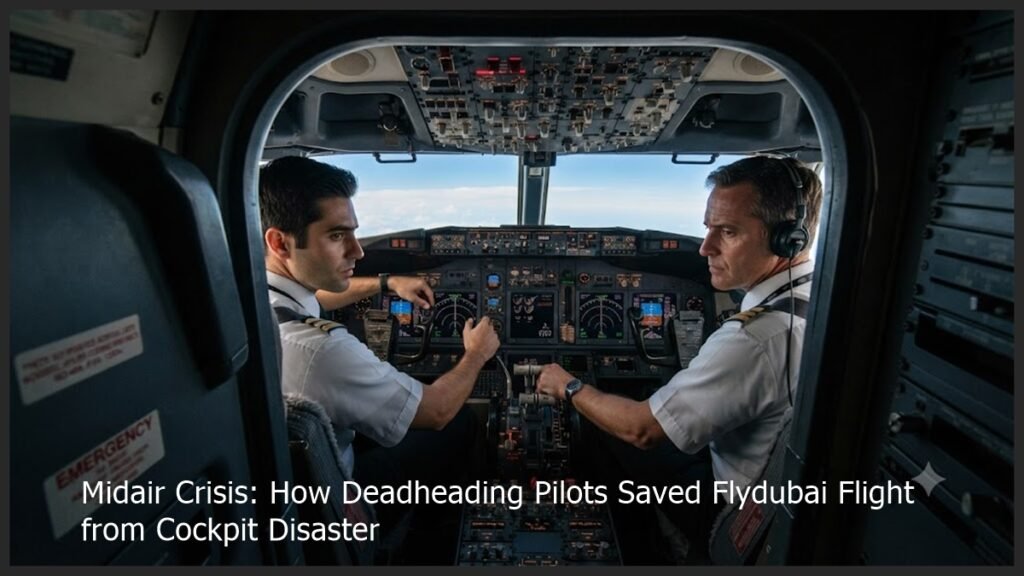


An ordinary repositioning routine turned into an extraordinary act of heroism at 35,000 feet, demonstrating how deadheading pilots saved flydubai flight passengers from what could have been a catastrophic aviation disaster. When an unexpected physical altercation erupted between the flight deck crew, dozens of terrified travelers feared the worst. However, the presence of two off-duty airline aviators—traveling merely as passengers—proved to be the razor-thin margin between safety and tragedy.
Here is the authoritative breakdown of the harrowing midair emergency, the aviation practice of “deadheading,” and how quick-thinking relief crew members safely landed the aircraft.
What Does ‘Deadheading’ Mean in Commercial Aviation?
To understand how disaster was averted, one must first understand an industry-standard logistical protocol known as deadheading.
In commercial aviation, deadheading refers to the practice of transporting non-operating, off-duty airline crew members (pilots, first officers, or flight attendants) as passengers aboard a commercial flight. These crew members are not on duty during the flight; rather, the airline is repositioning them to another base or airport so they can operate a scheduled return leg.
Under aviation regulatory frameworks such as the U.S. Federal Aviation Administration (FAA) and international International Civil Aviation Organization (ICAO) rules, deadheading personnel sit in passenger seats or cockpit jumpseats. While off duty, they remain fully trained, certified professionals intimately familiar with aircraft flight decks and standard operating procedures (SOPs).
The Altercation: Panic in the Cockpit
The flight bound toward Jerusalem/Tel Aviv was proceeding normally when a violent disturbance suddenly broke out inside the cockpit. According to eyewitness accounts, the first officer (co-pilot) unexpectedly turned aggressive and launched a physical assault against the captain.
The commotion quickly spilled over into the forward passenger cabin. Shouting, abrupt maneuvers, and obvious signs of distress behind the armored cockpit door sent panic through the aircraft.
Speaking directly to the Associated Press (AP), passenger Daniel Schlichter described the terrifying moments as travelers realized their flight was out of control:
“The panic was instant when the scuffle began. Several passengers courageously tried to help hold down the aggressive co-pilot, but we had no idea what was happening behind the door. We didn’t know who was in control.”
Schlichter recalled the existential dread shared by everyone on board:
“When two unfamiliar men rushed forward toward the cockpit, we didn’t know who they were or whether we could trust them. We feared they might be hijackers attempting to redirect the aircraft toward Iran. The tension was suffocating.”
Inside the Cockpit: How Deadheading Pilots Saved Flydubai Flight
Fortunately, the two individuals who breached the forward area were not hostile threats; they were two licensed trainee pilots positioned on the aircraft via deadheading logistics. The airline had ticketed them as passengers on this leg specifically to ferry them to position for a return flight back to Dubai.
Recognizing an existential threat to the aircraft:
- Breaching and Restraining: One trainee pilot managed to push into the cockpit, assist in neutralizing the aggressive co-pilot, and assess the status of the primary pilot.
- Assuming Control of the Controls: With the primary crew incapacitated or compromised, the two trainee pilots assumed control of the dual flight management systems.
- Calming the Cabin: Shortly after stabilizing the aircraft’s attitude and heading, an announcement crackled through the cabin speakers. The aviators identified themselves, announced that the threat was neutralized, and informed travelers that they were initiating an emergency diversion.
The aircraft subsequently made a safe, controlled emergency landing at Tabuk Regional Airport in northwestern Saudi Arabia. Emergency medical personnel and local authorities met the aircraft immediately on the tarmac. No passengers suffered fatal injuries.
Passenger Daniel Schlichter summarized the collective gratitude of the cabin: “Those two men stepped up in the face of sheer chaos. We owe them our lives.”
Aviation Safety Analysis: Why Deadheading Redundancy Matters
Commercial aviation relies heavily on multi-layered redundancy—not just in mechanical systems, but in human personnel.
While deadheading is strictly designed as an operational necessity to solve airline crew scheduling bottlenecks, incidents like this spotlight its unintended benefits. Having qualified aviation personnel seated in the cabin provides an informal backup layer during rare, high-stakes medical or security crises.
Airlines and regulatory bodies continue to review psychological evaluation guidelines and cockpit monitoring systems to prevent internal crew altercations. Yet, without the decisive intervention of the off-duty trainee crew, this incident could have had a devastating outcome.

Frequently Asked Questions (FAQs)
What is the difference between deadheading and commuting in aviation?
Deadheading is scheduled, paid, and mandated by an airline to reposition a crew member for official duty. Commuting, by contrast, is entirely personal travel undertaken by crew members to travel between their home residence and their assigned home airport base.
Can deadheading pilots legally fly an aircraft during an emergency?
Yes. Under aviation emergency command authority, if the operating pilots are incapacitated or physically unable to control the aircraft safely, any qualified and licensed pilot on board may assist or assume control under emergency declarations to ensure the safety of the flight.
Where did the diverted Flydubai flight land?
Following the midair cockpit struggle, the relief crew stabilized the aircraft and successfully completed an emergency diversion to Tabuk, Saudi Arabia, ensuring all passengers and crew were brought safely to the ground.
Conclusion
Aviation safety protocols are forged in moments of crisis, and the dramatic diversion to Tabuk serves as a powerful reminder of how quickly professional competence can turn a potential disaster into a triumphant rescue. As official investigative bodies analyze the cockpit altercation, international travelers will forever remember how deadheading pilots saved flydubai flight from tragedy.