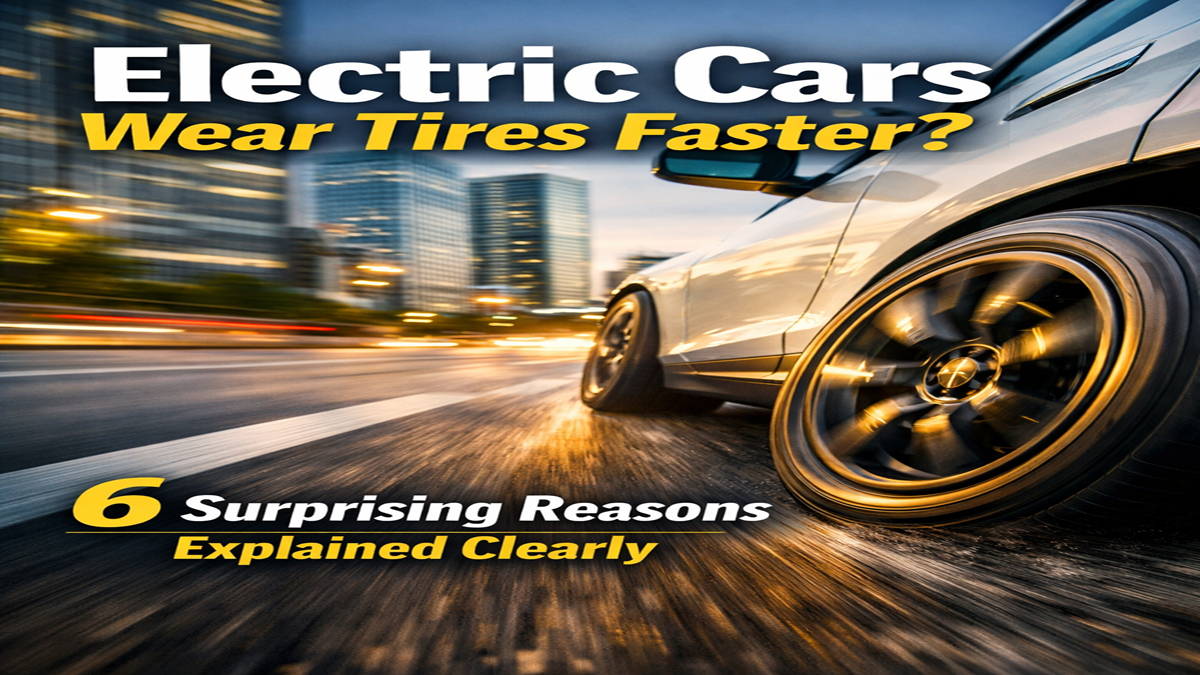

The question “Why electric cars wear tires faster” is becoming increasingly relevant as EV adoption grows. While electric vehicles offer lower running costs and zero emissions, tire wear remains a lesser-known drawback.
Why EV Tires Wear Faster
Electric cars are heavier than traditional vehicles due to large battery packs. This extra weight puts more pressure on tires, causing faster wear.
Another key factor is instant torque. Unlike petrol cars, EVs deliver full power instantly when the accelerator is pressed. This sudden force increases friction, leading to quicker tire degradation.
Driving Dynamics Play a Role
Regenerative braking, a common EV feature, helps recharge batteries but also adds stress to tires during deceleration. Combined with the vehicle’s weight, this increases wear.
Sharp turns and aggressive driving habits further accelerate tire damage.
Special Tires for EVs
To address this issue, manufacturers are developing EV-specific tires with stronger sidewalls and advanced rubber compounds. These are designed for durability and reduced rolling resistance.
Background
With EV adoption rising globally, tire manufacturers are adapting to new demands. Tire longevity has become a key focus area.
What’s Next
Drivers can extend tire life by maintaining proper pressure and adopting smoother driving habits. Despite this issue, EV benefits still outweigh the drawbacks.
FAQs on why electric cars wear tires faster explained
1. Why do EV tires wear faster?
Due to higher weight and instant torque.
2. Can EV tires last longer?
Yes, with proper driving habits and maintenance.
3. Are special tires available for EVs?
Yes, manufacturers are producing EV-specific tires.